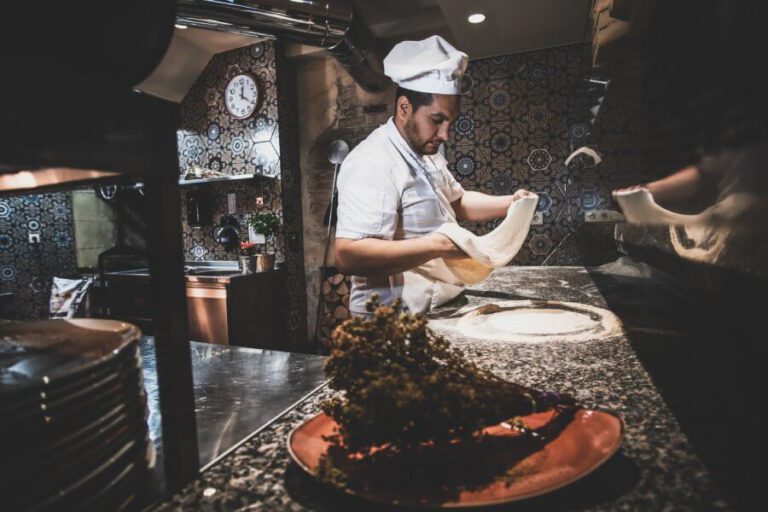

Working as a chef requires skill, concentration and responsibility. A successful service depends on preparation, timing, teamwork and the ability to make decisions under pressure.
Yet professional commitment does not always translate into financial security.
For some chefs, the difficulty is low pay. For others, it is the number of hours required to earn that salary, unpredictable income or living costs that leave little room for savings.
Understanding chef pay means looking beyond the salary figure to the hours, expenses and stability attached to the job.
Not every chef struggles financially. Earnings vary substantially between countries, employers, specialisms and career stages. However, those differences help explain why success in the kitchen and a comfortable living do not always arrive together.
What Does Chef Pay Actually Look Like?
There is no single global salary that accurately represents professional chefs.
In the United States, the Bureau of Labor Statistics reported median annual pay of $62,470 for chefs and head cooks in May 2025. Within that category, the lowest-paid 10% earned less than $37,900, while the highest-paid 10% earned more than $98,560.
The separate category of cooks had median hourly pay of $17.62 in the same period. Restaurant cooks had a median of $17.98 per hour. These categories cover different responsibilities and should not be treated as interchangeable.
These are US wage figures, rather than take-home income or international benchmarks. They show why a headline about “chef salaries” can miss the financial experience of people in different kitchen roles.
1. A Salary Can Look Better Than the Hours Behind It
Annual pay does not reveal how much time a job requires.
The Bureau of Labor Statistics notes that chefs and head cooks commonly work evenings, weekends and holidays, and that some work more than 40 hours a week.
Consider a simplified example of a fixed annual salary of $39,000, spread across 52 weeks, with no additional payment for extra hours:
| Weekly working hours | Annual hours used in calculation | Effective gross pay per hour |
|---|---|---|
| 40 hours | 2,080 | $18.75 |
| 50 hours | 2,600 | $15.00 |
| 60 hours | 3,120 | $12.50 |
This is an illustrative calculation, not a market salary estimate or a statement about overtime entitlements. It excludes adjustments for leave, benefits and taxes.
The salary remains the same, but the time required to earn it changes considerably.
For a chef comparing jobs, actual working hours therefore matter alongside the advertised pay. Preparation, closing duties, ordering and administration all need to be included when understanding the workload.
2. Comfortable Living Depends on What the Income Must Cover
A salary cannot be judged separately from the circumstances of the person earning it.
Housing, transport, childcare, household size and financial commitments all affect how far an income goes. Two chefs earning the same amount may have very different levels of financial security.
For this discussion, a comfortable living means being able to cover regular expenses while leaving some room for savings, unexpected costs and time away from work.
A useful way to assess an offer is to consider:
- What remains after taxes and essential household expenses?
- Does the working pattern create additional transport or childcare costs?
- Are hours and earnings predictable?
- What paid leave and other benefits are included?
- Is there a realistic path to higher earnings?
Being able to pay this month’s bills and being able to build long-term stability are different financial positions.


3. Restaurant Revenue Does Not Automatically Become Staff Pay
A full dining room can give the impression that a restaurant has plenty of money available. However, sales must cover the entire operation.
The US National Restaurant Association’s 2025 Restaurant Operations Data Abstract, based on responses from more than 900 restaurants, reported median income before taxes of 2.8% of sales for full-service restaurants and 4.0% for limited-service restaurants. Payroll and benefits represented a median of 36.5% of sales in the full-service segment. These figures describe the surveyed US businesses, rather than every restaurant worldwide.
Ingredients, premises, equipment, utilities and other operating expenses compete for the same revenue.
This helps explain why a busy business may still find pay increases difficult to fund. It does not make inadequate pay sustainable for employees.
The practical challenge is creating a business model that can cover its costs while offering worthwhile employment. Menu pricing, waste, staffing, opening hours and service design all belong in that discussion.
4. Seasonal and Variable Work Can Make Income Less Predictable
Financial comfort also depends on consistency.
The International Labour Organization identifies low wages, seasonality and long working hours among structural challenges affecting tourism employment. This is broader sector evidence, rather than a finding about every chef role.
For a chef whose work depends on tourist seasons, events or temporary bookings, a strong month may need to cover a quieter period later.
This creates a difference between earning well during a busy week and earning enough across the whole year.
Predictability matters when rent, bills and other commitments continue regardless of demand. A role with guaranteed hours may therefore have a different financial value from one with a higher rate but uncertain availability.
5. Experience Takes Time to Translate Into Higher Earnings
Building culinary skill is a gradual process.
The Bureau of Labor Statistics describes chefs often spending years in other kitchen positions before progressing to chef or head cook roles. Training may involve workplace learning, apprenticeships or formal culinary education.
For an individual, that creates an important career question: how will growing skills lead to better pay?
A useful progression conversation should cover more than a future job title. It should explain which responsibilities, competencies and results lead to a pay review.
For example, someone taking on staff training, stock control or additional supervisory duties needs clarity about whether their compensation will change.
Professional development becomes more financially meaningful when the connection between contribution and reward is visible.
6. Freelance Work Brings Costs Alongside Opportunity
Private dining, catering and freelance work may offer different ways to earn. However, a booking fee is business revenue before expenses.
As an illustrative example, a $600 private dinner booking with $220 in ingredients, travel and other direct costs leaves $380 before tax and remaining business overheads.
If planning, shopping, preparation, travel, service and cleaning take 12 hours altogether, that is approximately $31.67 per working hour before those remaining deductions.
This example is not a typical market rate. It shows why evaluating a booking requires counting the full job.
Independent chefs also need to consider time spent responding to enquiries, preparing quotes, marketing and handling administration. Not every working hour produces a separate payment.
A higher fee can improve earnings only when the full costs and time involved make sense.


What Could Improve Financial Stability for Chefs?
There is no single solution that fits every kitchen or career stage. However, clearer employment arrangements can make the financial reality easier to assess.
For employers, practical starting points include:
- Transparent pay: State the salary or hourly rate and explain the hours attached to it.
- Accurate time records: Understand how long the work actually takes.
- Clear progression: Connect additional skills and responsibilities with defined pay reviews.
- Predictable scheduling: Help staff plan their income and personal commitments.
- Sustainable operations: Review pricing, waste and service demands alongside payroll decisions.
For chefs, comparing opportunities means considering the complete arrangement: earnings, actual hours, benefits, travel costs, stability and progression.
For independent work, it means calculating income after expenses and including preparation and administration in the time estimate.
These are starting points for better decisions and conversations. They do not remove the wider pressures facing either workers or businesses.
Culinary Skill Should Support a Sustainable Career
A professional kitchen depends on people who can deliver consistently, make sound decisions and take responsibility for their work.
At Magical Chefs, we believe the financial realities of those careers deserve open discussion. Loving cooking should be compatible with planning a future, handling unexpected expenses and having a life beyond work.
Understanding why chefs struggle financially is a necessary part of understanding what makes a culinary career sustainable.
Help Shape the Future of the Culinary Industry
Salary figures can show differences in earnings, but they cannot explain every individual experience behind them.
That is why Magical Chefs is asking chefs and culinary professionals about the pressures, opportunities and challenges they face.
If you work in the culinary industry, share your experience through our anonymous chef survey. Your perspective on pay, working hours and career opportunities can help build a clearer picture of working life.
The goal is to better understand what is happening and what could realistically improve.
Your experience matters. Help shape the conversation.